
On a sunny weekend in mid September, students from across Europe (specifically Britain, Ireland, Hungary, the Netherlands, Germany, Belgium and Switzerland) gathered for the third ESCHA conference (European Student Housing Co-operative Housing Alliance). This was the largest ESCHA conference to date, and indicates the demand for student-led housing is growing. There was a mix of long established projects with properties to fledgling new groups.
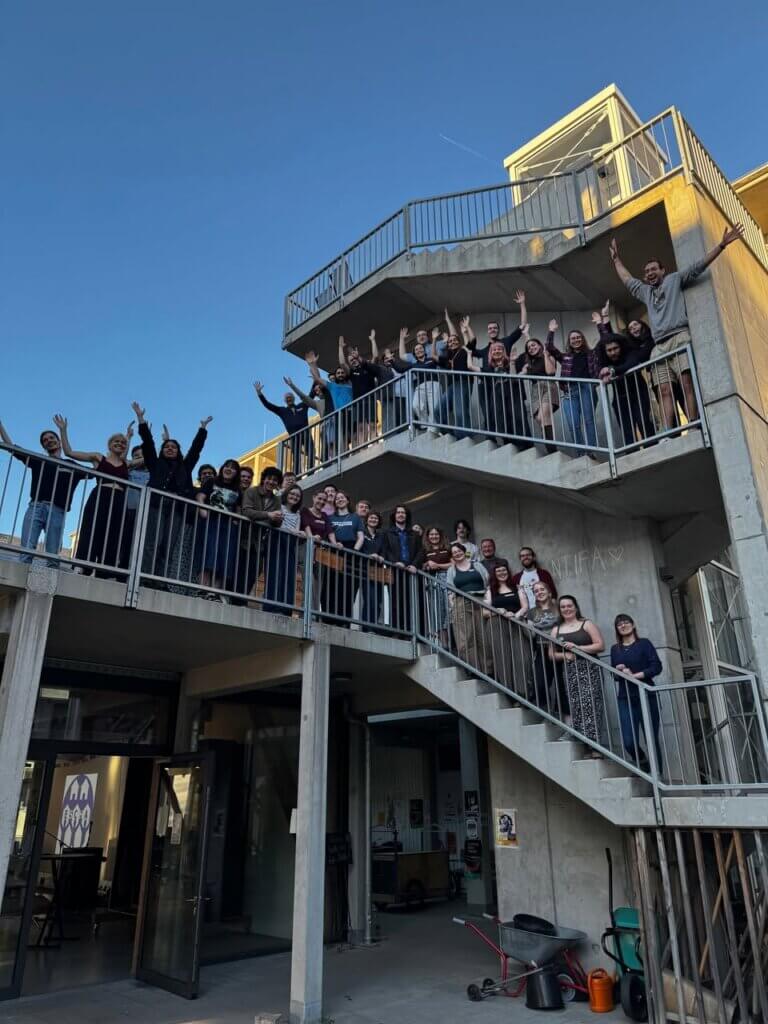
Representatives from The European Commission’s Affordable Housing Taskforce, North American Students for Co-operation (NASCO), Aontas na Mac Léinn in Éirinn (AMLE), NUS-USI (Union of Students in Ireland), Queens Students’ Union (Belfast), Trinity College Dublin Students’ Union, and Co-ops Europe were also in attendance.
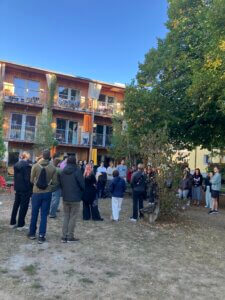
The conference took place in Heidelberg, at the inspiring Collegium Academicum (CA), the first self-managed student residence in Germany conceived, developed, and built entirely by a student volunteer initiative. The CA is built to passive house standards and demonstrates the power of ambition at scale; housing 176 students, trainees, and doctoral students. This is a truly remarkable project where design and intentional living create a hive of activity and community.
Equitable participation is non-negotiable at the CA and whilst support is offered when needed, the CA are very clear that participation isn’t optional. Their interview process doesn’t rely on chance, and prospective members are required to take part in group activities as part of the selection process. The standard to which they hold each other to account has enabled them to achieve a phenomenal amount. On group tours we visited their workshop housing an automated wood working machine which the residents use to build and repair their furniture and units.
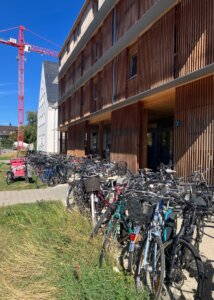
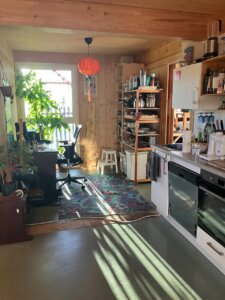
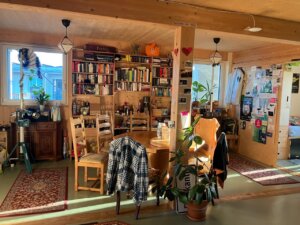
Heidelberg itself is an attractive city, whereby treelined streets, tramlines and off-road cycleways are common. This is a place designed for people, with an overall high standard of housing. As part of the conference, we visited local examples of community led-housing and learnt how community led projects and neighbourhood networks thrive and support one another. This isn’t a case of simply striving to build more housing but crucially considering how communities want to live together.
Local community-led projects including housing and creative cooperatives have actively acquired and repurposed multiple Cold War-era US military buildings and infrastructure following the complete withdrawal of American forces. The CA for example acquired the land, on the site of a former U.S Army miliary hospital by purchasing the property directly from the city of Heidelberg in June 2019. It is heartening to see the positive transformation of these abandoned sites, protected in perpetuity from private commercial developers and exploitation.
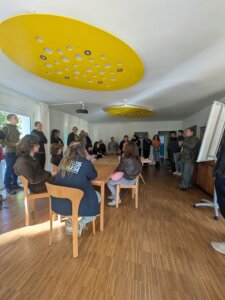
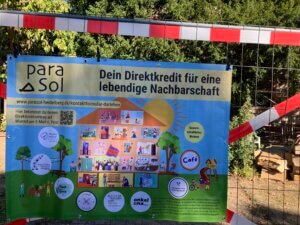
Back at the ESCHA conference, we learnt from a long-established housing co-operative of six members in the Netherlands (pictured below) and their innovative approach to creating resilience on a small scale. One example included how tasks and roles are rotated each year to resist knowledge concentration amongst more established members. We also heard about the challenges of maintaining older properties, particularly from NASCO (North American Students for Co-operation) members, where some of the co-op properties in the USA are close to 100 years old.
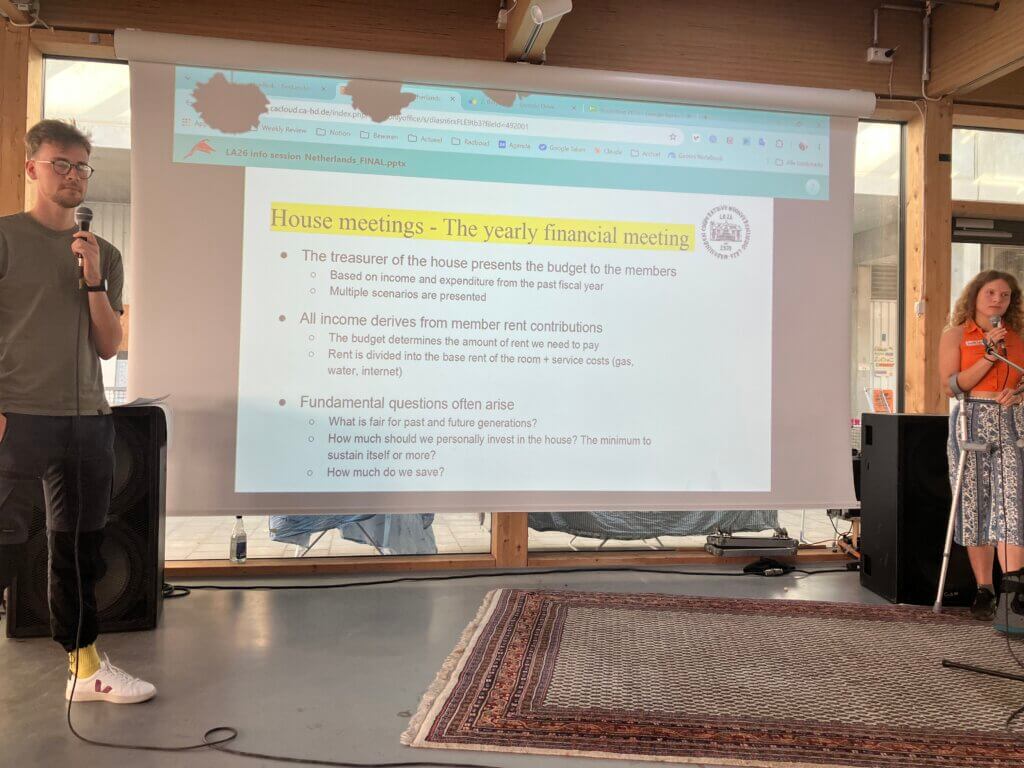
The conference showcased innovative international examples of creating democratic and community focused solutions. This sparked conversations on how to grow at scale and what needs to happen politically to enable such projects. Roughly 10% of the European population lives in housing cooperatives, compared to just 0.2% of the housing stock in the UK, whereby individual home ownership and council run housing have historically been heavily prioritised. On our return to the UK with our newer student housing co-op sector, we are keen to apply this to a UK context. For those who couldn’t make this year, it looks like the ESCHA gathering is only going from strength to strength. Thanks to all the organisers including our SCH Chair, Scott Jennings, Hannes Juchem (CA) and Jens-Uwe Köhler (Studentdorf) and the CA for hosting. We look forward to next year!